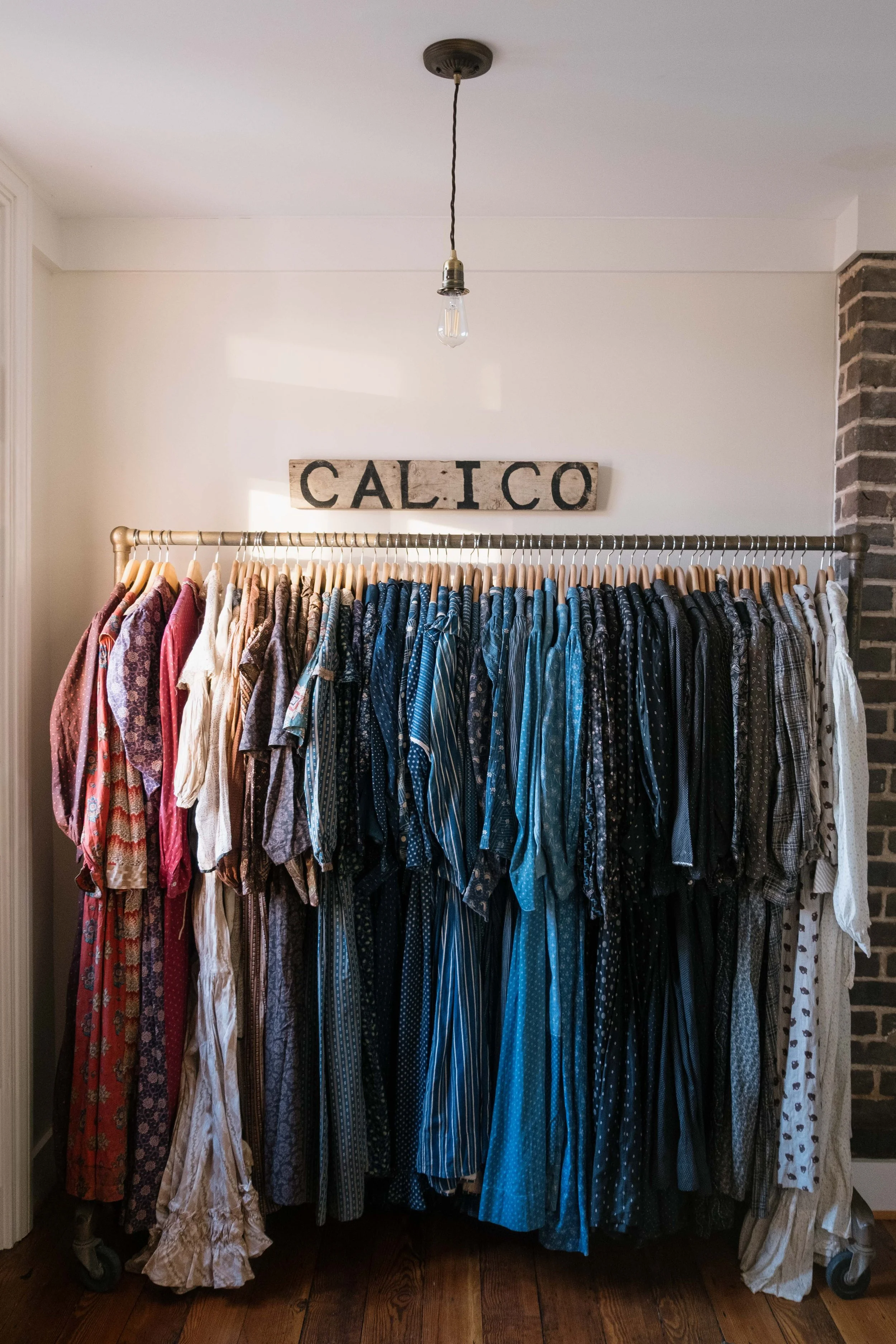
“May I ask you something that’s been on my mind? Why are “calico dresses” so rarely seen? I suspect there isn’t another shop that carries as many of them as yours does. And how do you know that the garment is a “calico dress”? It isn’t mentioned anywhere, so I was wondering!”
This was a question we got recently from one of our customers, and truth be told, we get some version of this question often— so we figured it was high time we answered publicly and more in depth!
This is by no means the most extensive or educated explanation on the topic, but it is one that will hopefully at least answer some questions you may be having along these lines as well since around here, calico is a word that is bandied about weekly!
WHAT IS CALICO?
Calico, by very minimal and simple (and United States) definition, is a type of plain woven cotton fabric, with equal warp and weft, that is printed.
Usually, though not always, the print is very small or fine in design.
The key essentially being that the print is what makes the pattern, vs. the pattern being woven into the fabric itself like a homespun or gingham fabric.
Linguistically, the word calico was used to refer to fabric, plain or printed, until the importation of it in the 1780s wherein the US starting using the word “calico” to refer to the printed design. Whereas Europe and other countries maintained the word calico to also simply mean fabric.
But back to the printed aspect of the US definition that we know today...
Over the centuries there have been different methods of printing cotton fabric, including— block printing, roller printing, and plate printing. It is with these types of printing methods that you can most commonly date a fabric and therefore date the garment it was made from!
Stay tuned for another post we are in the process of writing about roller printing!
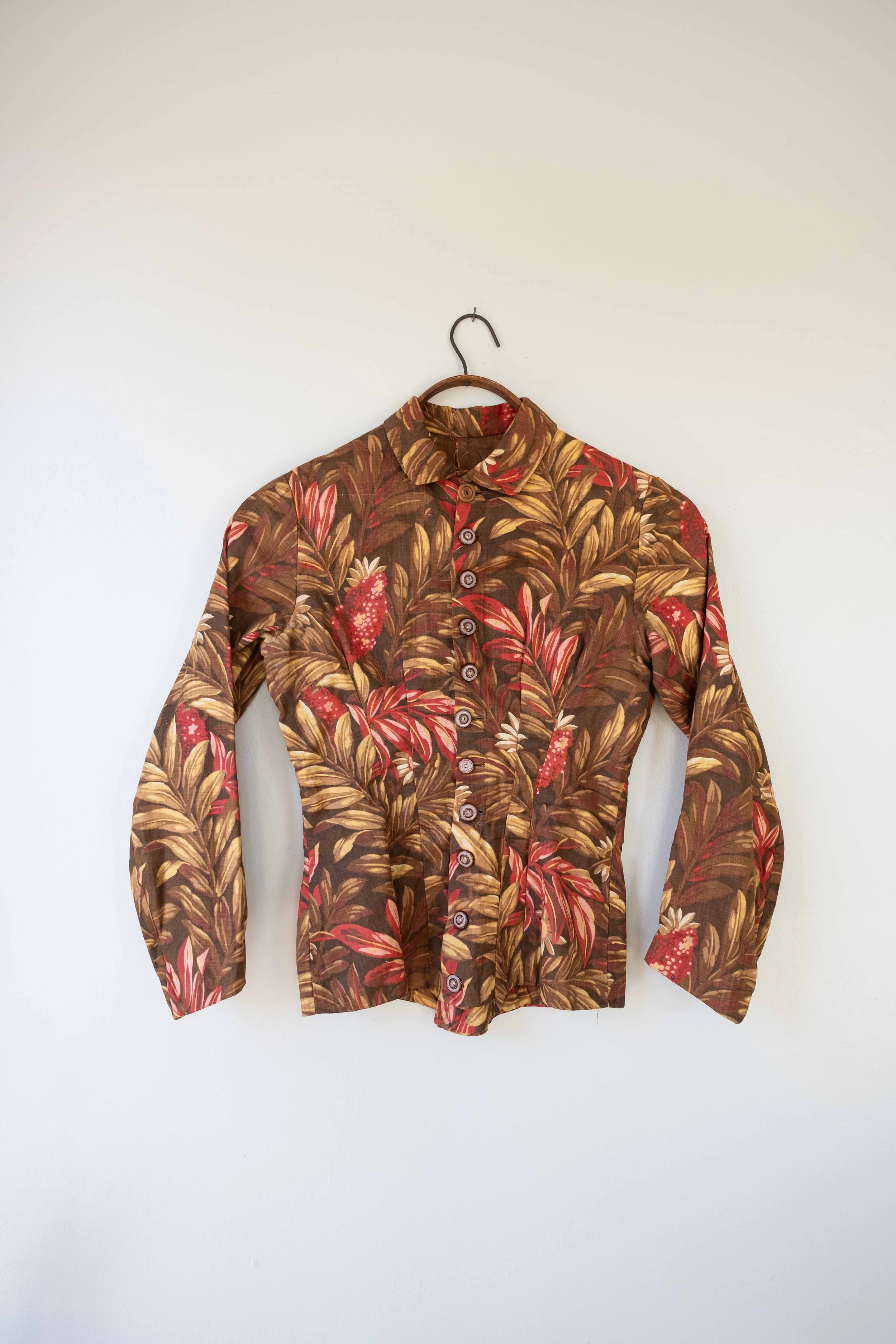
An 1860s floral calico blouse from our archives
CALICO PIECES THAT WE CARRY
Calico fabric exists in modern made garments today! It is simply a name for a type of fabric, but it is a specific era of that fabric that we are most interested in here at our shop.
We curate calico garments primarily from the 1840s-1940s.
The bulk of our collection is from the late 19th century, as these decades saw the height of the calico wrapper dress and other garments made from calico. Due to fabric becoming more widely available with the introduction of the Industrial Revolution, which drove down costs and made it more accessible for the everyday consumer.
For example, Abigail Adams wrote of paying $6 per yard for muslin imported from India in 1798. In 1832, American Calico was 37 1/2 cents a yard and it dropped to around 12 cents by 1843. By 1872, calico at 4 cents a yard, was so cheap that merchants in San Antonio used it as a substitute for brown wrapping paper!
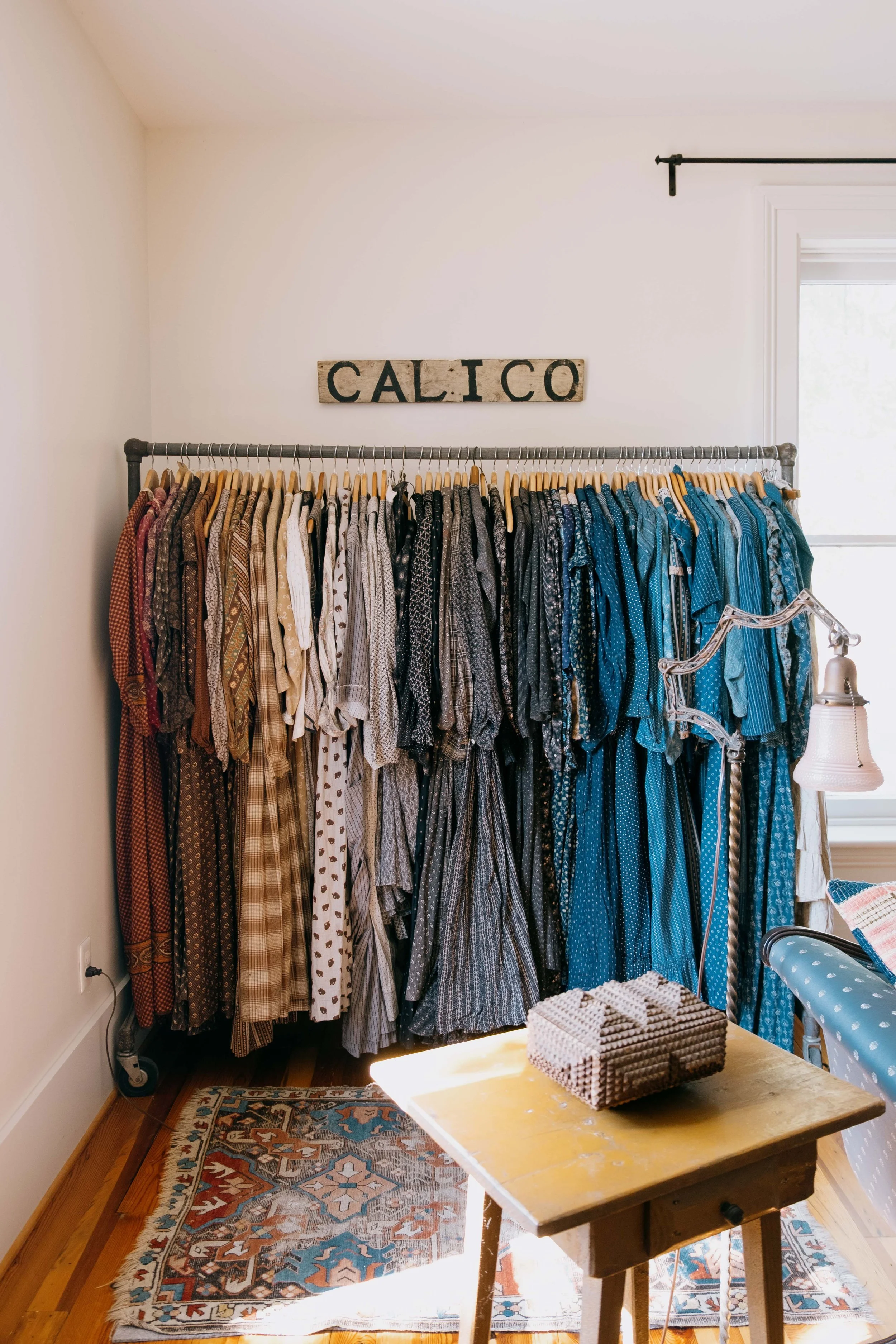
Our in-shop collection is even more extensive than what can be found on our website, however we list new pieces from it every month if you can’t make it to our shop in person to see it for yourself!
HOW CAN YOU TELL A GARMENT IS MADE FROM ANTIQUE CALICO?
As we mentioned earlier, it is primarily the dating of the fabric that lends us to being able to tell when a garment was made, but there are other factors as well. Including the style of the garment, buttons, zippers, thread etc.
There are a lot of resources out there for dating fabrics, primarily in the way of books, and these are our favorite resources to use. Especially as the internet increasingly becomes a dumpster fire in the way of any kind of useful or reliable resource!
But really more than anything, it’s because we have been around a lot of fabric over several decades, which means that we can tell pretty quickly whether a piece is within the era of our interest.
WHY IS ANTIQUE CALICO SO RARE?
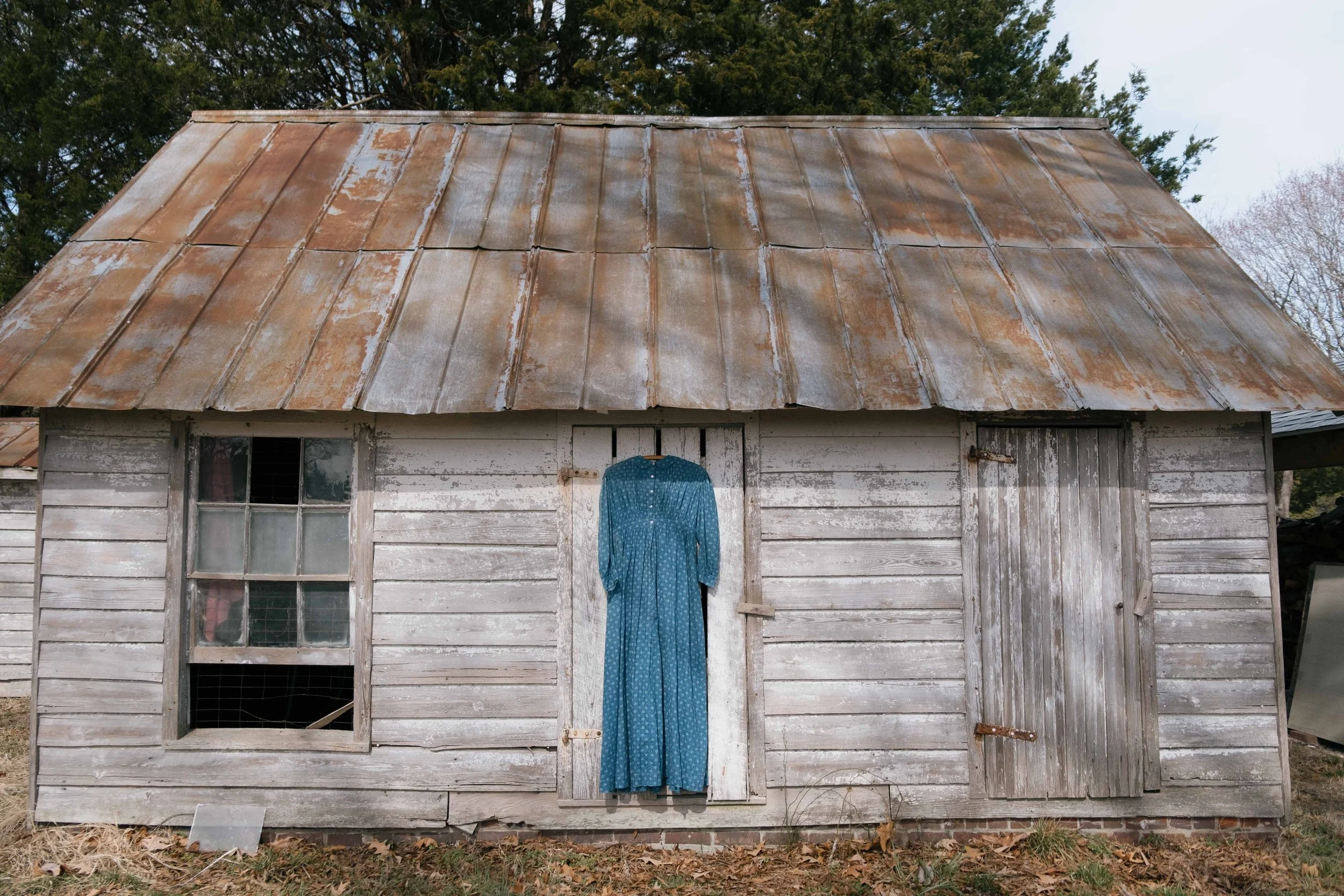
Antique calico garments from the late 19th century and early 20th are more rare primarily due to their age— having a longer span of time to survive than say a pair of denim bell bottoms from the 1970s! But also because many of these garments were handmade and therefore in shorter supply than those mass produced in later decades (like that pair of 1970s bell bottoms).
Aside from these facts, the turn of the century saw the peak of the “make-do” mindset (another post we have in the works!).
Largely out of necessity, due to The Great Depression, but also just out of a more engrained generational belief around being a good steward of what you owned and not wasting materials, as they were more precious and harder to come by.
This means that many garments, once worn out, were repurposed into either other garments in the way of patches for mending, or repurposed into entirely different things like quilts, curtains, rags, dolls, rugs, and other useful items.
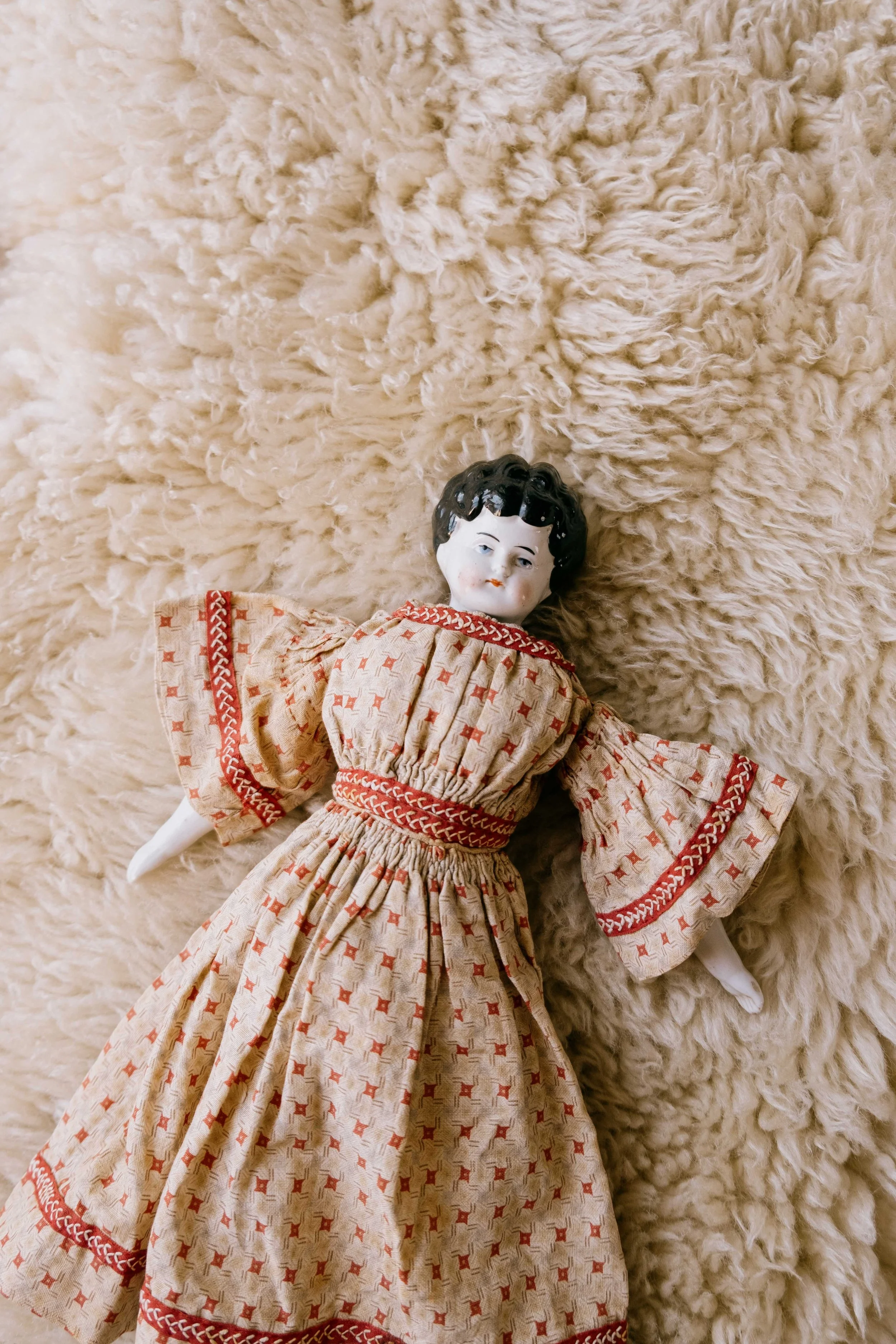
A 19th century porcelain doll with period dress
And now you know!
We of course have an entire collection of quilts resplendent with antique calico, that you can see here, but you can also exclusively shop a portion of our antique calico clothing collection below.
